Published by Jessica Conway
on
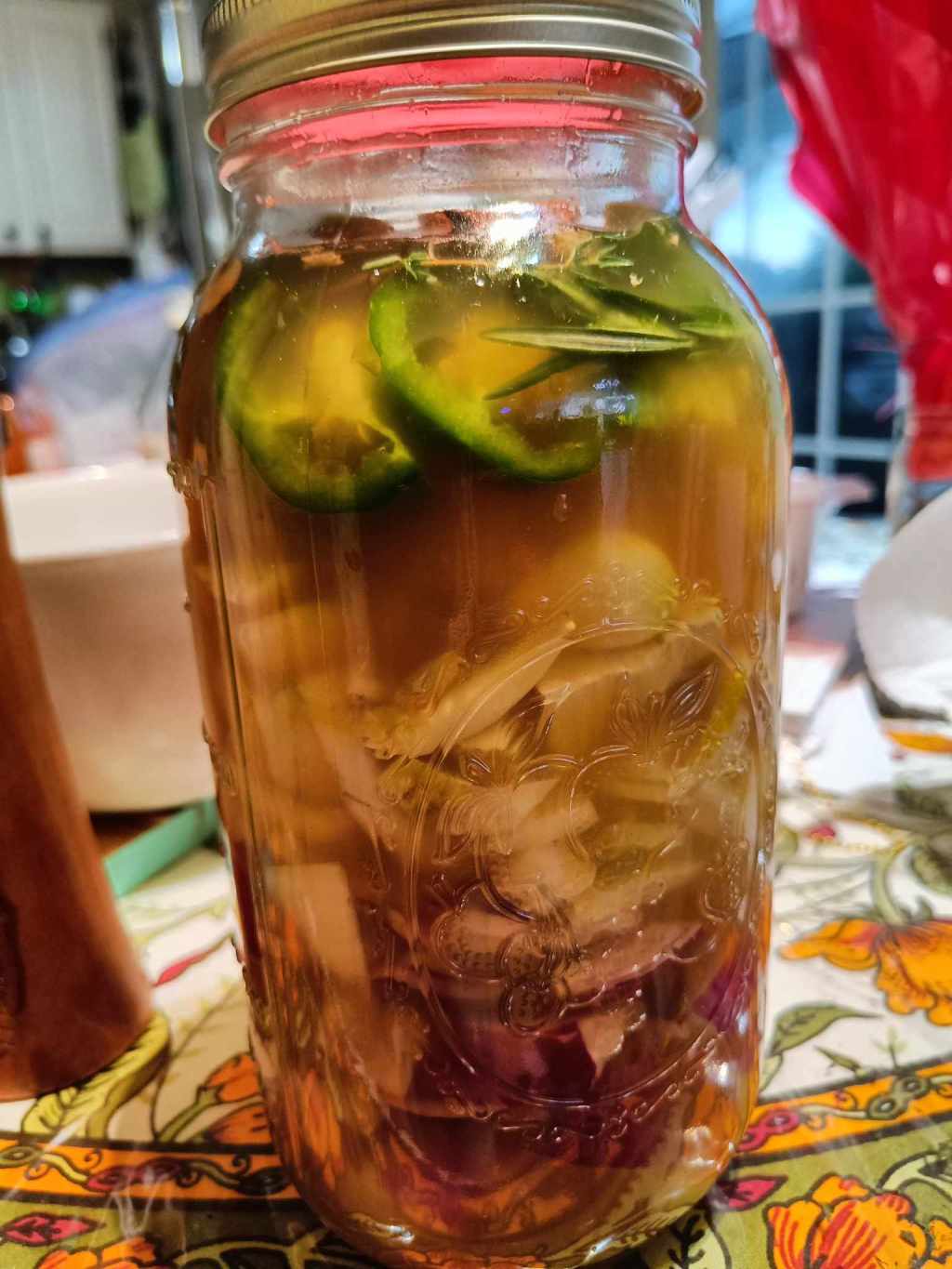
When I first heard of adding fresh vegetables, fruits, and herbs to vinegar my first thought was “won’t that make you sick?” This was long before I studied herbalism. Despite my hesitation I began to see that fire cider had a rich history and was a traditional folk remedy for colds and flu. I now make this beautiful, powerful concoction every year and truly look forward to process. As the seasons change and summer slowly begins to ebb, I automatically think about the months ahead and the thought of chopping the aromatic ingredients and placing them in layers in the jar feels very cozy. It is a late summer ritual that prepares us for the rest of the year.
Fire cider as a medicine is effective because vinegar can extract certain chemical compounds that water or other liquids cannot. The organosulfur compounds, allicin, and volatile oils from the onions and garlic are extracted and preserved into the vinegar as well as the nutrients from the other ingredients to create a tonic.
Fire cider works by warming the system and helping the body to fight off the virus or illness itself. This doesn’t “cure” the cold but it does shorten the duration and help you find relief. The ingredients listed help circulation and opening the bronchial tubes, expelling mucus, and reducing inflammation.
There are many different versions and this one is close to the basic recipe to keep things simple (simple is often the best!).
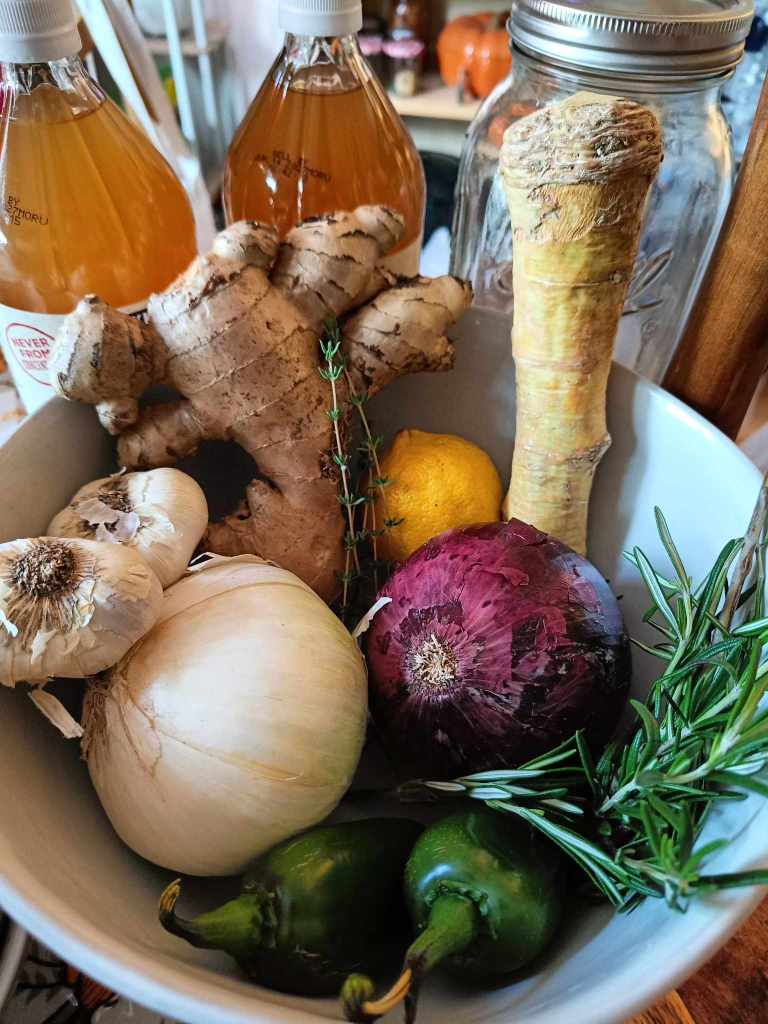
Many people tend to get sick around the fall so I like to start now in early August with making this wonderful natural medicine. This will ensure that if you pick up a cold in September, your ferment will be ready.
When making fire cider, the most important ingredient is apple cider vinegar. I wouldn’t recommend trying to use white vinegar for this because the taste is less appealing and believe me, it will already have quite a punch! Organic apple cider vinegar with the mother is best. Luckily this is widely available and fairly inexpensive.
I advise using a gallon sized mason jar. It’s easily sterilized and is less likely to break. Also a fermenting lid will save a you a lot of trouble. The metal lids can corrode over during the fermenting process. Also, the fermenting lid lets you to skip the step of “burping” the jar. This is opening the lid to let out the gasses forming inside the jar during the fermentation process.
With the rest of the ingredients, in all actuality, they are optional and changeable. If you do not have any jalapeno peppers, omit them! If you have only white onions, omit the red onion. Each ingredient does have a different chemical profile that can affect the way it works on your body so if you omit something or swap an ingredient it may change how the overall formula operates but the main ingredients are the vinegar, onion and garlic. From there, you can be more creative after you feel comfortable. I recommend following this recipe at least once to get a good grasp on the flavor and process and after that compare to other recipes or try some ingredients of your own!
Materials
Chopping board
Sharp knife
Gallon sized mason jar
Metal mason lid ring (wide mouth)
Fermenting lid
Ingredients:
Apple cider vinegar (whole large bottle will be used)
1 red onion
1 white onion
2 inch pieces of Ginger root
1/2 cup Fresh horseradish root
2 heads of garlic
2 Jalapenos
1 lemon (zest and juice)
Pinch of Turmeric
Pinch of Cayenne pepper
Fresh rosemary sprig
2-3 springs fresh thyme
Instructions:
- Start with a very clean gallon sized mason jar. It must be completely dry as any added water will dilute and potentially spoil the ferment.
- Remove the skins of the onions and chop them roughly. The size and shape do not matter very much since this will be strained but chopping allows the nutrients to be better absorbed by the vinegar. Add them to the jar.
- Next remove the skins of the garlic. You can chop them if you’d like but it is unnecessary and you can just add them to the jar.
- Slice the jalapenos and add, including the seeds and add them to the jar.
- Zest the lemon on a grater and add to the jar. Then slice the lemon in half and squeeze each half into the jar.
- Add a pinch of turmeric (up to 1 TBS is fine).
- Add a tiny pinch of cayenne pepper. Trust me it will go a long way here.
- Add a sprig of fresh rosemary and try to push it down along the sides of the jar so it will stay down and not rise back to the top. I like to use the edge of a knife to do this.
- Repeat step 8 with the sprigs of thyme.
- Pour the entire bottle of apple cider vinegar into the jar over the other ingredients.
- Put the rubber lid on and then the metal ring and tighten onto the jar.
- Shake!
- Place in a cool, dark, place to ferment for 4-6 weeks. Be sure to shake daily.
- Strain the fresh ingrdients after 4-6 weeks and place into either a different jar or reuse the same jar. Seal and place in a cabinet. You no longer need to shake it after this point.
- For colds take 3 TBS a day either by spoon or in a glass with honey and lemon juice. For prevention take 1 TBS a day.
- Get creative! Use this on salads as dressing, add to soups or other meals!
Notes:
*This will smell particularly pungent while fermenting. After a few weeks, the smell will calm down to some extent but it will still be pungent wherever you decide to store it. No one prepared me for this when I first started.
*Be sure to use fresh, ripe vegetables. Don’t use spoiled roots or herbs.
*I remove the skins because skins can introduce pesticide or bacteria into the fermentation process but I know there are some who choose not to remove the skins here as they will be strained eventually.
*Be sure to cover the vegetables completely with vinegar. If pieces are rising to the top, they will not be protected by the fermentation and could spoil. Shaking helps to resolve this but if something is noticeably uncovered by the vinegar, I usually add more vinegar or try to push it down with a fermenting stick or clean spoon or knife.
*You can use the fire cider before it is completely done but I would wait at the very least for 3 weeks. This is because the fermenting gets particularly odorous and creates gasses before this that are unappetizing.
*Horseradish- this is a great ingredient as a fresh root. If you cannot find the fresh root, I don’t recommend using the bottled variety. There are added ingredients in the pre-processed horseradish sauces that may spoil the ferment. Sadly its better to omit it completely and be safe rather than sorry.
*How long will it keep? Vinegars can have a long shelf life. Provided that you have strained the concoction well, it should keep for at least 1 year. Always smell and examine the mixture for any strange changes after you have strained it before tasting.
I hope you enjoy and consider giving this recipe a try. It’s not as hard as it may seem at first to make. It is an enjoyable process and a formula that can help you stay well through fall, winter, and next spring!
Happy fermenting!
Jessica


 StarsAndYarrow
Leave a comment