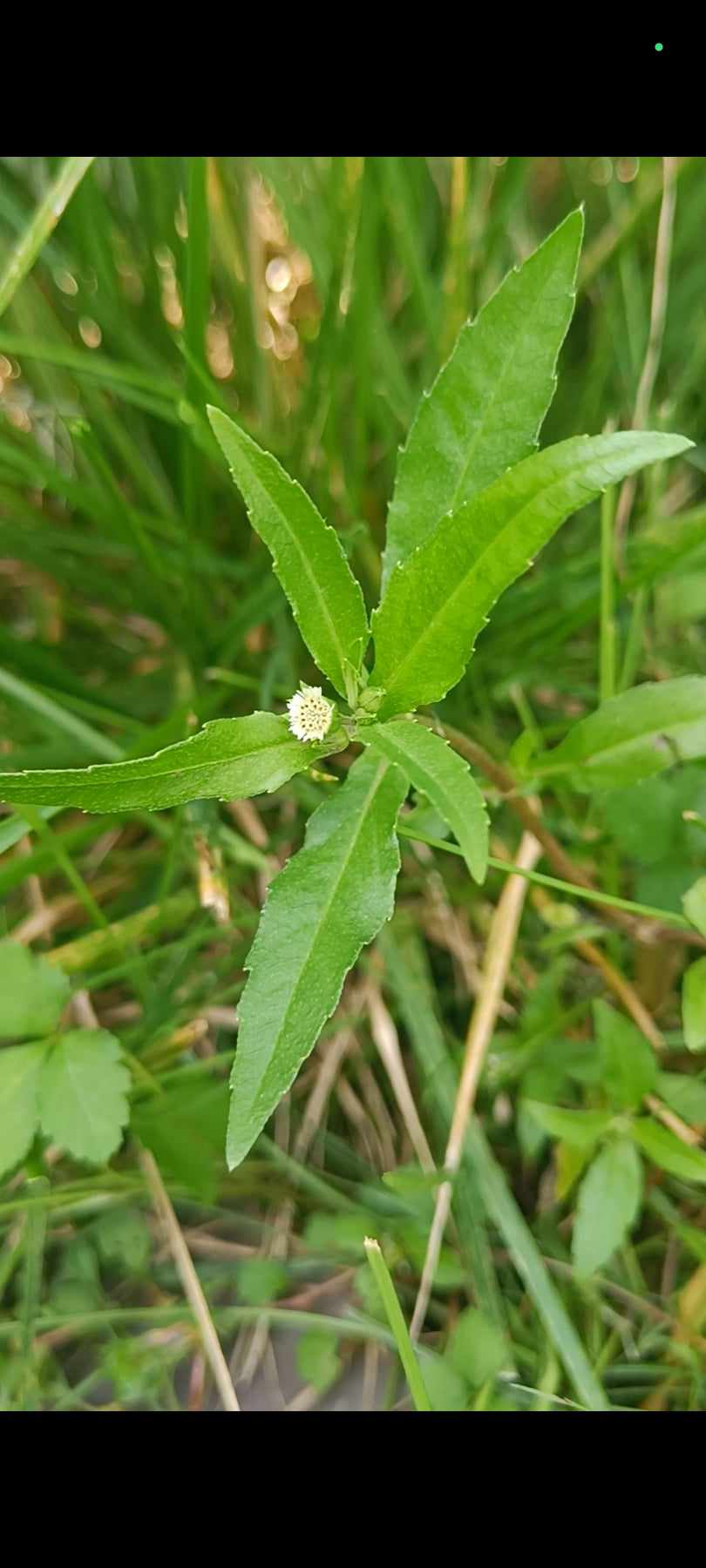
Yet another amazing healer has chosen to volunteer in my garden disguised as a “weed”. This plant was persistent. As I cleared the weeds and grasses crowding my garden walkway earlier this year, this was one that continued popping up. At last, defeated, I examined this interesting plant. I noted that it was in the sunflower family (one of the most common plant families) and took a good look at its structure.
The flowers were definitely strange and composite so I took out my phone and used google lens to identify it, carefully examining and comparing the plant to the pictures and descriptions. Then I brought out my books and did some research. Surprisingly, this healer was not found in any of my medicinal book collection. I turned my focus online to studies and databases, scouring for legitimate, reliable resources. I didn’t find as much information as I thought but what I did find, surprised me.
This plant has a rich history of use in Ayurvedic medicine and Traditional Chinese medicine. One big theme in all herbal traditions surrounding this herb is hair growth. Flavonoids and phytochemicals within this plant are responsible for protecting weakened hair shafts as well as stimulating new hair growth. It was more of a folk remedy in Asia, used mainly for this purpose.
But that is not the most amazing feature of this humble plant. Research shows that this herb’s anti-inflammatory and antioxidant properties protects the liver from inflammation. It contains wedelolactone and dimethyl-wedelolactone which perform anti-toxic actions and helps to regenerate liver cells. It is thought to help with hepatic steatosis, hepatomegaly, liver fibrosis, hepatitis, spenomegaly, and jaundice to name a few of its many actions.
There are recent studies from the NIH which explore the use of Eclipta Prostrata’s ability to treat cancer. In 2023, this study found that the flavonoids and phenolic compounds exhibited potent free-radical scavenging abilities and reducing power in stomach cancer and colon cancer.
On top of this, many western herbalists seem to be more unaware of the healing abilities of this plant because it is still being tested and explored, potentially unlocking new uses to the incredibly long list of cures it currently has.
A few other reported uses of this plant are for urinary tract infection, anemia, pain relief, and skin healing.
Perhaps this quiet, mysterious plant will help to pave the way for more people to open their minds to the healing powers of the plants all around us in our local yards, parks, and gardens. Let your weeds grow wild!
Jessica



 StarsAndYarrow
Leave a comment